
27 Degrees to Octants
27° = 0.6 oct
Calculation: oct = 27° × 0.0222222 = 0.6 oct
Degree to Octant Converter
How wide is 27°?
27 degrees is comparable to the pitch angle of a typical house roof.
What does 27° look like?
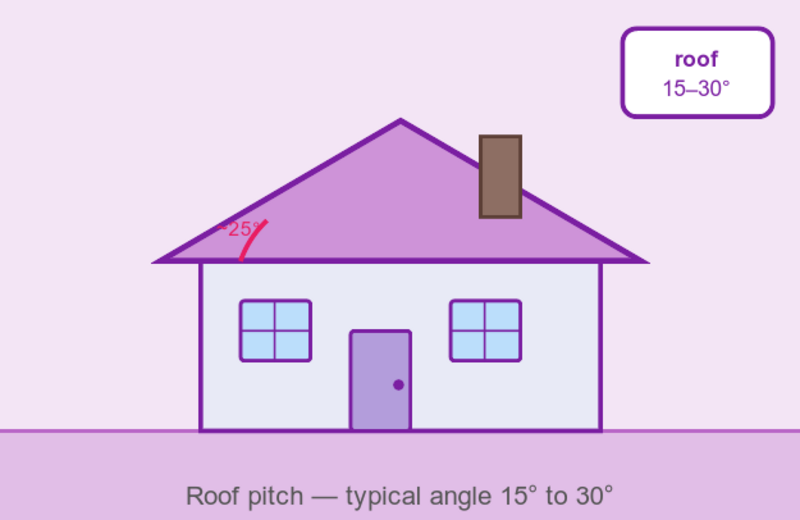
Did you know? Standard escalator angle is 30°.
Escalators worldwide are built at 30° inclination (35° maximum for shorter rises).
How to Convert Degree to Octant
1 degree = 0.0222222 octants
Octant = Degree × 0.0222222
Example: 27° × 0.0222222 = 0.6 oct
Reverse Conversion
To convert octants back to degrees:
- Remember, 1 octant equals 45 degrees.
- To convert 0.6 oct to°, multiply
0.6 x 45, resulting in27°.
27 ° is also equal to:
- 0.47124 radian
- 30 gradian
- 0.075 turn
About these units
Degree: The degree (°) is a non-SI unit of plane angle defined as 1/360 of a full rotation.It is accepted for use with the SI due to its long-standing practical importance in navigation, surveying, engineeri...
Octant: An octant is one eighth of a full circle.It appears in geometry, navigation history, and spatial partitioning.
Frequently Asked Questions
How much is 27 degrees in octants?
27 degrees equals 0.6 octants. This is calculated by multiplying 27 by the conversion factor 0.0222222.
What does 27 degrees look like in octants?
27 degrees (0.6 octants) is a moderate angle common in architecture and roof pitch design.
How do you calculate 27 degrees to octants?
Multiply 27 by the conversion factor 0.0222222. The calculation is 27 × 0.0222222 = 0.6 octants. This factor is defined by international measurement standards.
Share This Calculation

For general conversions between degrees and octants, see the degrees to octants converter.
Also convert Degrees to:

