
100 Arc Minutes to Degrees
100' ≈ 1.6667°
Calculation: ° = 100' × 0.0166667 ≈ 1.6667°
Arc Minute to Degree Converter
How wide is 100'?
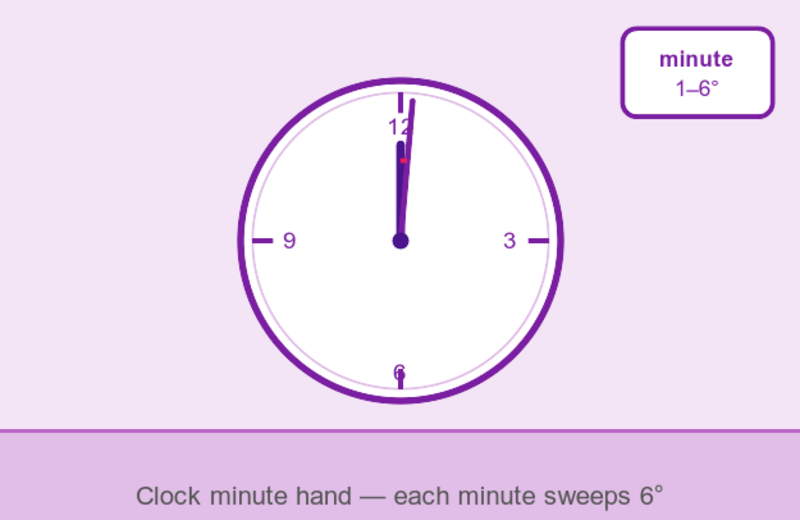
100 arc minute (1.7 degrees) is comparable to the angle a clock minute hand sweeps in a few seconds to one minute.
What does 100' look like?
How to Convert Arc Minute to Degree
1 arc minute = 0.0166667 degrees
Degree = Arc Minute × 0.0166667
Example: 100' × 0.0166667 = 1 23°
Reverse Conversion
To convert degrees back to arc minutes:
- Remember, 1 degree equals 60 arc minutes.
- To convert 1 23° to', multiply
1 23 x 60, resulting in100'.
100 ' is also equal to:
- 0.029089 radian
- 1.8519 gradian
- 0.0046296 turn
Frequently Asked Questions
How much is 100 arc minutes in degrees?
100 arc minutes equals 1.6667 degrees. This is calculated by multiplying 100 by the conversion factor 0.0166667.
What does 100 arc minutes look like in degrees?
100 arc minutes equals 1.6667 degrees, a conversion used in navigation, trigonometry, and engineering design.
How do you calculate 100 arc minutes to degrees?
Multiply 100 by the conversion factor 0.0166667. The calculation is 100 × 0.0166667 = 1.6667 degrees. This factor is defined by international measurement standards.
Share This Calculation

Nearby Conversions
For general conversions between arc minutes and degrees, see the arc minutes to degrees converter.

