
415 Arc Minutes to Degrees
415' ≈ 6.9167°
Calculation: ° = 415' × 0.0166667 ≈ 6.9167°
Arc Minute to Degree Converter
How wide is 415'?
415 arc minute (6.9 degrees) is comparable to the slope of a gentle hill or a ski bunny slope.
What does 415' look like?
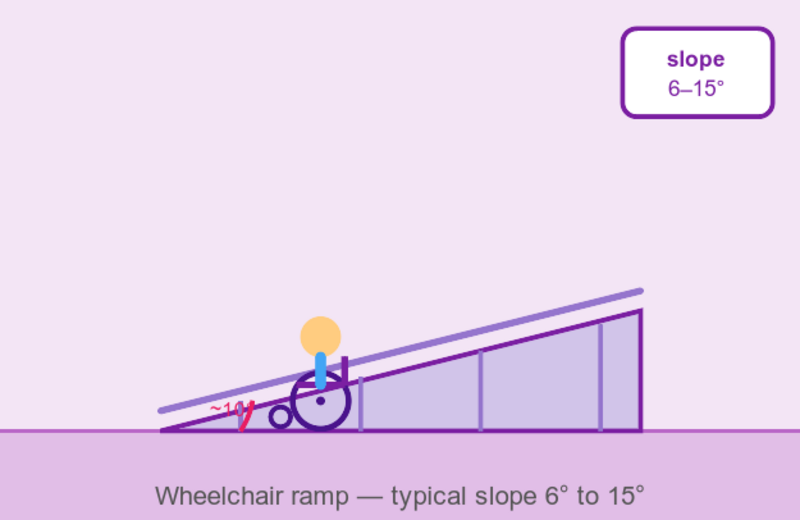
How to Convert Arc Minute to Degree
1 arc minute = 0.0166667 degrees
Degree = Arc Minute × 0.0166667
Example: 415' × 0.0166667 = 6.9167°
Reverse Conversion
To convert degrees back to arc minutes:
- Remember, 1 degree equals 60 arc minutes.
- To convert 6.9167° to', multiply
6.9167 x 60, resulting in415'.
415 ' is also equal to:
- 0.12072 radian
- 7.6852 gradian
- 0.019213 turn
Frequently Asked Questions
How much is 415 arc minutes in degrees?
415 arc minutes equals 6.9167 degrees. This is calculated by multiplying 415 by the conversion factor 0.0166667.
What does 415 arc minutes look like in degrees?
415 arc minutes equals 6.9167 degrees, a conversion used in navigation, trigonometry, and engineering design.
How do you calculate 415 arc minutes to degrees?
Multiply 415 by the conversion factor 0.0166667. The calculation is 415 × 0.0166667 = 6.9167 degrees. This factor is defined by international measurement standards.
Share This Calculation

Nearby Conversions
For general conversions between arc minutes and degrees, see the arc minutes to degrees converter.

