
100 Acres to Square Millimeters
100 ac ≈ 4.0469e+11 mm²
Calculation: mm² = 100 ac × 4.04686 × 10⁹ ≈ 4.0469e+11 mm²
Acre to Square Millimeter Converter
How big is 100 ac?
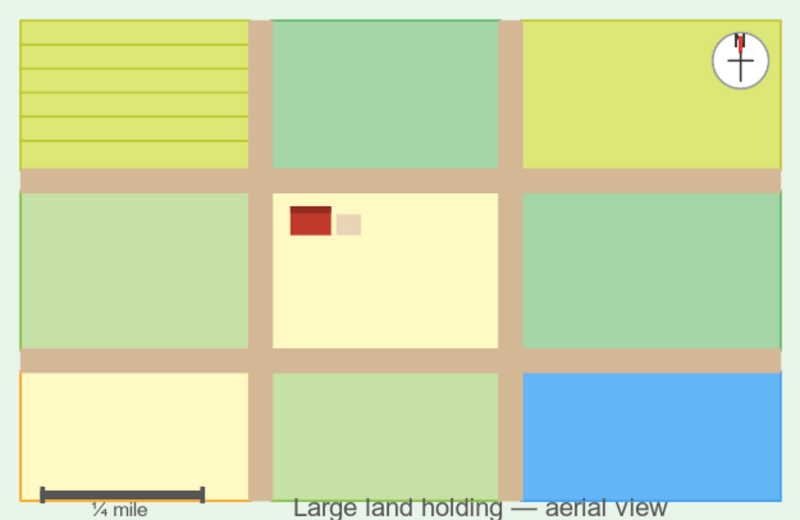
100.00 acres (4,356,000 sq ft) is about the size of a large farm or a rural estate.
What does 100 ac look like?
How to Convert Acre to Square Millimeter
1 acre = 4.04686 × 10⁹ square millimeters
Square Millimeter = Acre × 4.04686 × 10⁹
Example: 100 ac × 4.04686 × 109 = 4.0469 × 1011 mm²
Reverse Conversion
To convert square millimeters back to acres:
- Remember, 1 square millimeter equals 2.47105 × 10⁻¹⁰ acres.
- To convert 4.0469 × 1011 mm² to ac, multiply
4.0469 × 1011 x 2.47105 × 10-10, resulting in100 ac.
100 ac is also equal to:
- 404690 square meter
- 40.469 hectare
- 0.40469 square kilometer
- 6.2726 × 10⁸ square inch
- 4356000 square foot
Frequently Asked Questions
How much is 100 acres in square millimeters?
100 acres equals 4.0469 × 10¹¹ square millimeters. This is calculated by multiplying 100 by the conversion factor 4.04686 × 10⁹.
What does 100 acres look like in square millimeters?
100 acres (4.0469 × 10¹¹ square millimeters) is a typical US family farm.
How do you calculate 100 acres to square millimeters?
Multiply 100 by the conversion factor 4.04686 × 10⁹. The calculation is 100 × 4.04686 × 10⁹ = 4.0469 × 10¹¹ square millimeters. This factor is defined by international measurement standards.
Share This Calculation

Nearby Conversions
For general conversions between acres and square millimeters, see the acres to square millimeters converter.
Also convert Acres to:

