
3000 Hertz to Kilohertz
3000 Hz = 3 kHz
Calculation: kHz = 3000 Hz × 0.001 = 3 kHz
Hertz to Kilohertz Converter
How high is 3,000 Hz?
3,000 Hz is comparable to a fire alarm or smoke detector alert tone (typically 3,000–4,000 Hz).
What does 3,000 Hz look like?

How to Convert Hertz to Kilohertz
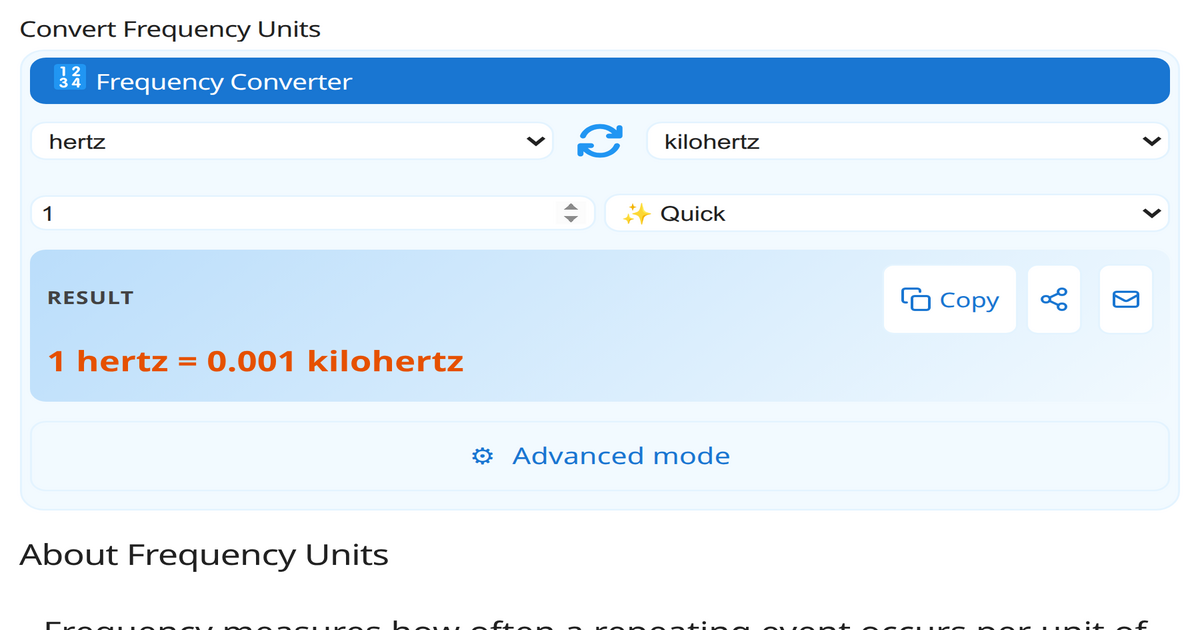
1 hertz = 0.001 kilohertz
Kilohertz = Hertz × 0.001
Example: 3000 Hz × 0.001 = 3 kHz
Reverse Conversion
To convert kilohertz back to hertz:
- Remember, 1 kilohertz equals 1000 hertz.
- To convert 3 kHz to Hz, multiply
3 x 1000, resulting in3000 Hz.
3000 Hz is also equal to:
- 0.003 megahertz
- 180000 revolution per minute
About these units
Hertz: SI unit of frequency; one cycle (or event) per second. Symbol: Hz = s⁻¹
Kilohertz: SI decimal multiple of hertz; 1 kHz = 1,000 Hz = 10³ Hz
Frequently Asked Questions
How much is 3000 hertz in kilohertz?
3000 hertz equals 3 kilohertz. This is calculated by multiplying 3000 by the conversion factor 0.001.
What does 3000 hertz look like in kilohertz?
3000 hertz (3 kilohertz) is treble range — high-pitched sounds up to the human hearing limit.
How do you calculate 3000 hertz to kilohertz?
Multiply 3000 by the conversion factor 0.001. The calculation is 3000 × 0.001 = 3 kilohertz. This factor is defined by international measurement standards.
Share This Calculation
For general conversions between hertz and kilohertz, see the hertz to kilohertz converter.
Also convert Hertz to:

