
2639 Inches to Inches
2639 in = 2639 in
= 219′ 11″
Calculation: in = 2639 in × 1 = 2639 in
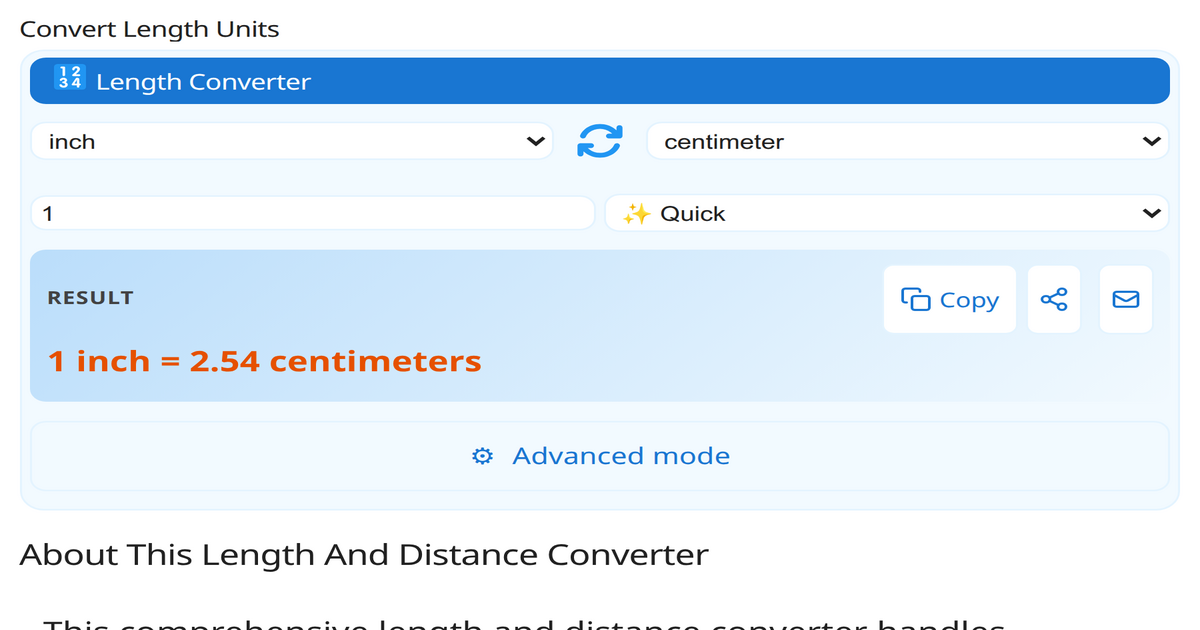
Inch to Inch Converter
How long is 2,639 in?
2,639 in (6,703.1 cm) is a large measurement, beyond typical human-scale references.
2,639 in on the inch scale
2,639 in = 2,639 in
How to Convert Inch to Inch
1 inch = 1 inches
Inch = Inch × 1
Example: 2639 in × 1 = 2639 in
Reverse Conversion
To convert inches back to inches:
- Remember, 1 inch equals 1 inches.
- To convert 2639 in to in, multiply
2639 x 1, resulting in2639 in.
2639 in is also equal to:
- 67031 millimeter
- 6703.1 centimeter
- 67.031 meter
- 0.067031 kilometer
- 219.92 feet
About these units
Inch: Imperial/US customary unit standardized as exactly 25.4 millimeters since 1959.
Inch: Imperial/US customary unit standardized as exactly 25.4 millimeters since 1959.
Frequently Asked Questions
How much is 2639 inches in inches?
2639 inches equals 2639 inches. This is calculated by multiplying 2639 by the conversion factor 1.
What does 2639 inches look like in inches?
2639 inches (2639 inches) is over six feet — typically measured in feet for convenience.
How do you calculate 2639 inches to inches?
Multiply 2639 by the conversion factor 1. The calculation is 2639 × 1 = 2639 inches. This factor is defined by international measurement standards.
Share This Calculation
Nearby Conversions
For general conversions between inches and inches, see the inches to inches converter.
Also convert Inches to:

