
1735 Psi to Pascals
1735 psi ≈ 1.1962e+7 Pa
Calculation: Pa = 1735 psi × 6894.76 ≈ 1.1962e+7 Pa
Psi to Pascal Converter
How much pressure is 1,735 psi?
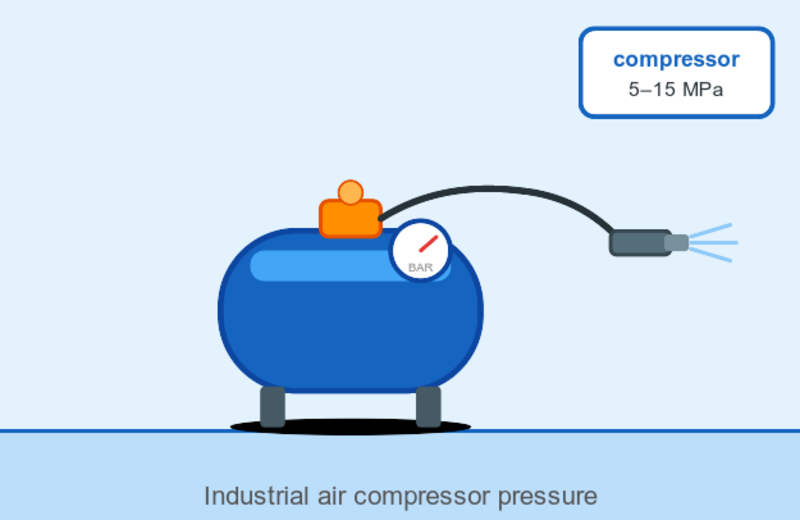
1,735 psi (11,962 kPa) is comparable to the pressure inside a paintball tank or high-pressure gas cylinder.
What does 1,735 psi look like?
How to Convert Psi to Pascal
1 psi = 6894.76 pascals
Pascal = Psi × 6894.76
Example: 1735 psi × 6894.76 = 1.1962 × 10⁷ Pa
Reverse Conversion
To convert pascals back to psi:
- Remember, 1 pascal equals 0.000145038 psi.
- To convert 1.1962 × 10⁷ Pa to psi, multiply
1.1962 × 107 x 0.000145038, resulting in1735 psi.
1735 psi is also equal to:
- 11962 kPa
- 119.62 bar
About these units
Psi: Imperial/US customary pressure unit equal to one pound-force per square inch.
Pascal: SI derived unit of pressure equal to one newton per square meter (N/m²).
Frequently Asked Questions
How much is 1735 psi in pascals?
1735 psi equals 1.1962 × 10⁷ pascals. This is calculated by multiplying 1735 by the conversion factor 6894.76.
What does 1735 psi look like in pascals?
1735 psi (1.1962 × 10⁷ pascals) is very high pressure — scuba tanks (3,000 psi) or industrial cylinders.
How do you calculate 1735 psi to pascals?
Multiply 1735 by the conversion factor 6894.76. The calculation is 1735 × 6894.76 = 1.1962 × 10⁷ pascals. This factor is defined by international measurement standards.
Share This Calculation

Nearby Conversions
For general conversions between psi and pascals, see the psi to pascals converter.
Also convert Psi to:

