
3315 Decibars to Pascals
3315 decibar = 33150000 Pa
Calculation: Pa = 3315 decibar × 10000 = 33150000 Pa
Decibar to Pascal Converter
How much pressure is 3,315 decibar?
4,808 psi (33,150 kPa) is comparable to the compressive strength of concrete.
What does 3,315 decibar look like?
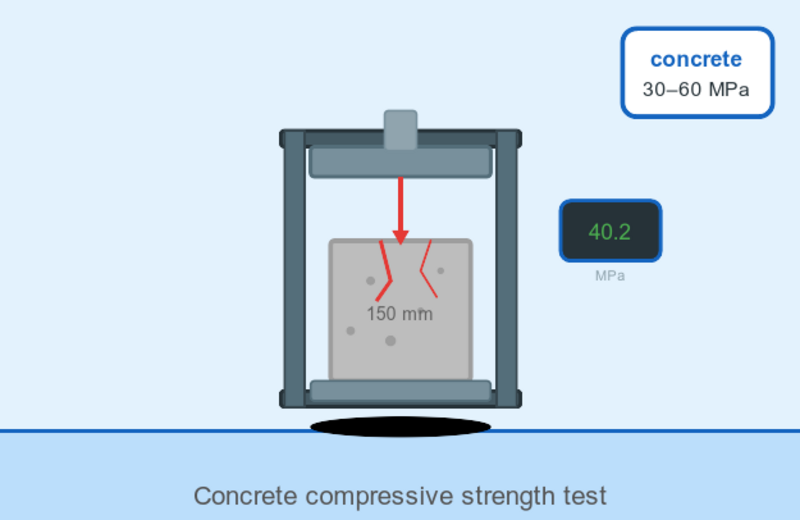
Did you know? Concrete compressive strength is 30,000 kPa.
Typical structural concrete has a compressive strength of 20-40 MPa (20,000-40,000 kPa).
How to Convert Decibar to Pascal
1 decibar = 10000 pascals
Pascal = Decibar × 10000
Example: 3315 decibar × 10000 = 3.315 × 10⁷ Pa
Reverse Conversion
To convert pascals back to decibars:
- Remember, 1 pascal equals 0.0001 decibars.
- To convert 3.315 × 10⁷ Pa to decibar, multiply
3.315 × 107 x 0.0001, resulting in3315 decibar.
3315 decibar is also equal to:
- 33150 kPa
- 331.5 bar
- 4808 psi
Frequently Asked Questions
How much is 3315 decibars in pascals?
3315 decibars equals 3.315 × 10⁷ pascals. This is calculated by multiplying 3315 by the conversion factor 10000.
What does 3315 decibars look like in pascals?
3315 decibars equals 3.315 × 10⁷ pascals, a conversion relevant in tire pressure measurement, weather forecasting, and engineering applications.
How do you calculate 3315 decibars to pascals?
Multiply 3315 by the conversion factor 10000. The calculation is 3315 × 10000 = 3.315 × 10⁷ pascals. This factor is defined by international measurement standards.
Share This Calculation

Nearby Conversions
For general conversions between decibars and pascals, see the decibars to pascals converter.

