
408 MPa to Psi
408 MPa ≈ 59175 psi
Calculation: psi = 408 MPa × 145.038 ≈ 59175 psi
MPa to Psi Converter
How much pressure is 408 MPa?
59,175 psi (408,000 kPa) is comparable to the cutting pressure of an industrial waterjet cutter.
What does 408 MPa look like?
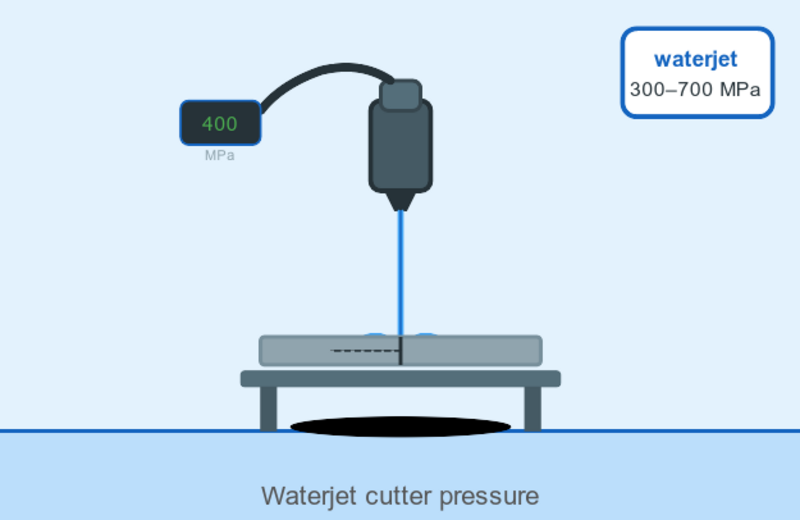
Did you know? Waterjet cutter is 414,000 kPa.
Industrial waterjets cut steel at 400-600 MPa (60,000-90,000 psi) using a hair-thin stream of water.
How to Convert MPa to Psi
1 MPa = 145.038 psi
Psi = MPa × 145.038
Example: 408 MPa × 145.038 = 59175 psi
Reverse Conversion
To convert psi back to MPa:
- Remember, 1 psi equals 0.00689476 MPa.
- To convert 59175 psi to MPa, multiply
59175 x 0.00689476, resulting in408 MPa.
408 MPa is also equal to:
- 4.08 × 10⁸ pascal
- 408000 kPa
- 4080 bar
About these units
MPa: SI-derived pressure unit equal to 1,000,000 pascals (10⁶ Pa).
Psi: Imperial/US customary pressure unit equal to one pound-force per square inch.
Frequently Asked Questions
How much is 408 MPa in psi?
408 MPa equals 59175 psi. This is calculated by multiplying 408 by the conversion factor 145.038.
What does 408 MPa look like in psi?
408 MPa (59175 psi) is extreme pressure — geological or material science applications.
How do you calculate 408 MPa to psi?
Multiply 408 by the conversion factor 145.038. The calculation is 408 × 145.038 = 59175 psi. This factor is defined by international measurement standards.
Share This Calculation

Nearby Conversions
For general conversions between MPa and psi, see the MPa to psi converter.
Also convert MPa to:

