
160 Knots to Kilometers Per Hour
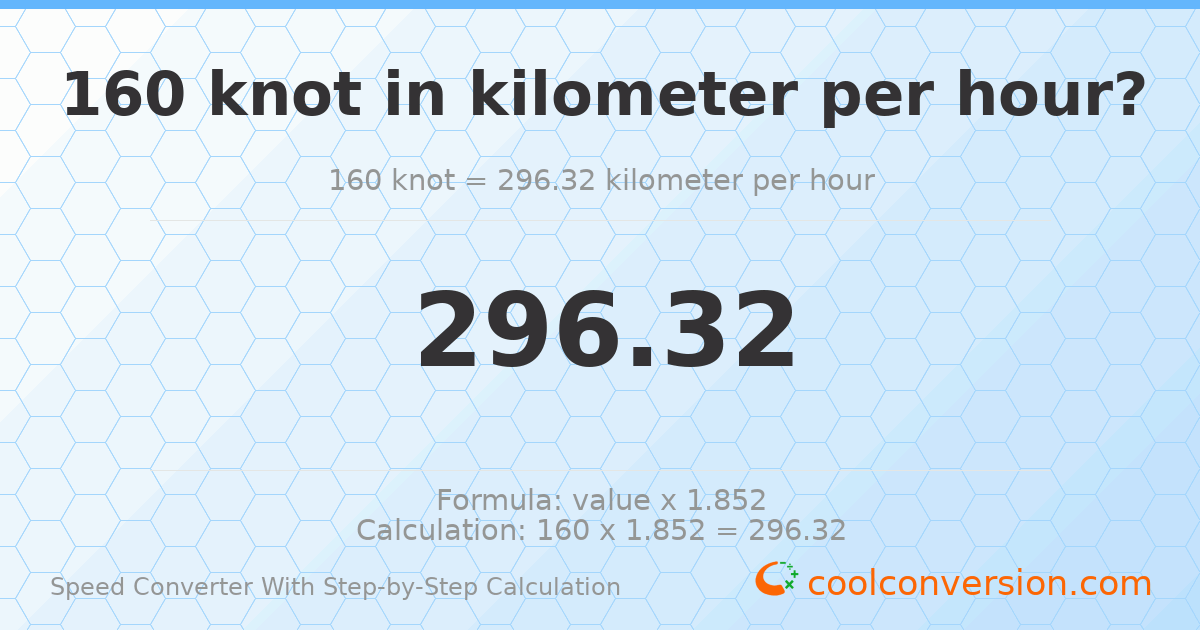
160 kn = 296.32 km/h
Calculation: km/h = 160 kn × 1.852 = 296.32 km/h
Knot to Kilometer Per Hour Converter
How fast is 160 kn?
184.1 mph (296.3 km/h) is about the cruising speed of a bullet train (Shinkansen) at around 200 mph.
What does 160 kn look like?
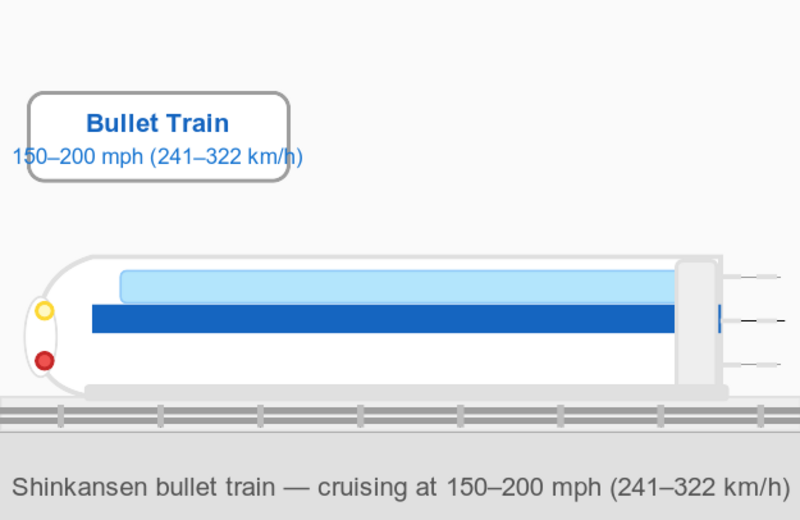
160 kn on the kilometer per hour scale
160.0 kn = 296.3 km/h
Did you know? Bullet train (Shinkansen) is 200 mph.
Japan's Shinkansen cruises at 150-200 mph (240-320 km/h). In service since 1964.
How to Convert Knot to Kilometer Per Hour
1 knot = 1.852 kilometers per hour exact
Kilometer Per Hour = Knot × 1.852
Example: 160 kn × 1.852 = 296.32 km/h
Reverse Conversion
To convert kilometers per hour back to knots:
- Remember, 1 kilometer per hour equals 0.539957 knots.
- To convert 296.32 km/h to kn, multiply
296.32 x 0.539957, resulting in160 kn.
exact This conversion factor is exact by international definition.
160 kn is also equal to:
- 82.311 meter per second
- 184.12 mile per hour
- 270.05 foot per second
Frequently Asked Questions
How much is 160 knots in kilometers per hour?
160 knots equals 296.32 kilometers per hour. This is calculated by multiplying 160 by the conversion factor 1.852.
What does 160 knots look like in kilometers per hour?
160 knots (296.32 kilometers per hour) is a commercial aircraft cruising speed.
How do you calculate 160 knots to kilometers per hour?
Multiply 160 by the conversion factor 1.852. The calculation is 160 × 1.852 = 296.32 kilometers per hour. This factor is defined by international measurement standards.
Share This Calculation
Nearby Conversions
For general conversions between knots and kilometers per hour, see the knots to kilometers per hour converter.
Also convert Knots to:

