
367° Rankine to Celsius
367°R ≈ -69.261°C
Formula: C = (R − 491.67) × 5/9
Rankine to Celsius Converter
How hot is 367°R?
367°R (-69.3°C) is an extremely cold temperature comparable to Arctic and Antarctic conditions.
What does 367°R look like?
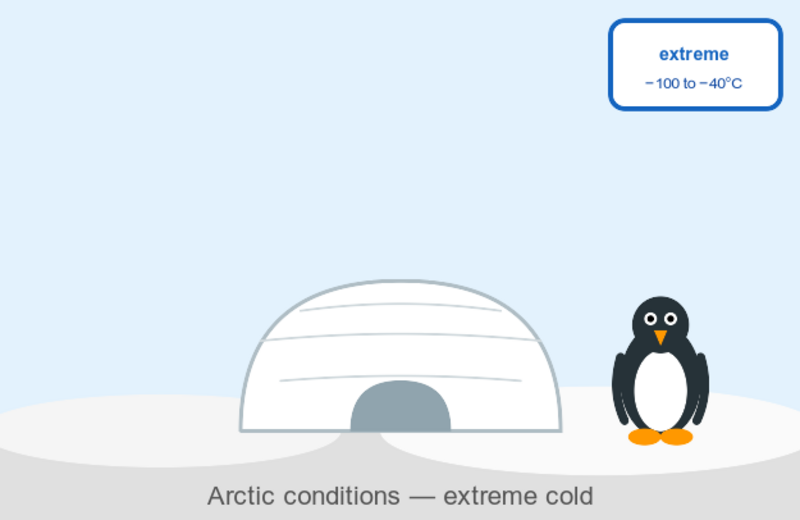
367°R on the Celsius scale
367.0°R = -69.26°C
Did you know? Dry ice sublimation is -78.5°C.
Solid CO2 doesn't melt — it sublimates directly into gas at -78.5°C (-109.3°F).
How to Convert Rankine to Celsius
The formula is:
C = (R − 491.67) × 5/9
Example: 367° Rankine = -69.261° Celsius
About these units
Rankine: The degree Rankine (°R) is an absolute temperature scale using Fahrenheit-sized increments.
Celsius: The degree Celsius (°C) is the SI-derived unit of temperature. It is defined so that 0 °C = 273.15 K exactly, with the same unit increment as the kelvin.
Frequently Asked Questions
What is 367°R in Celsius?
367°R equals -69.261°C. The formula is: C = (R − 491.67) × 5/9.
What does 367 degrees Rankine look like in degrees Celsius?
367 degrees Rankine equals -69.261 degrees Celsius, a conversion used in various practical applications.
How do you calculate 367°R to Celsius?
Use the formula: C = (R − 491.67) × 5/9. Applying it: 367°R = -69.261°C.
Share This Calculation

Nearby Conversions
Temperature conversion chart
| To Fahrenheit | To Celsius | To Kelvin | |
| From Fahrenheit (F) | F | (F - 32) × 5/9 | (F - 32) × 5/9 + 273.15 |
| From Celsius (C or o) | (C × 9/5) + 32 | C | C + 273.15 |
| From Kelvin (K) | (K - 273.15) × 9/5 + 32 | K - 273.15 | K |
For general conversions between Rankine and Celsius, see the Rankine to Celsius converter.
All unit conversions on CoolConversion use conversion factors defined or documented by internationally recognised standards bodies (such as ISO and NIST), including both SI and non-SI units.

