
2 Tablespoons to Milliliters
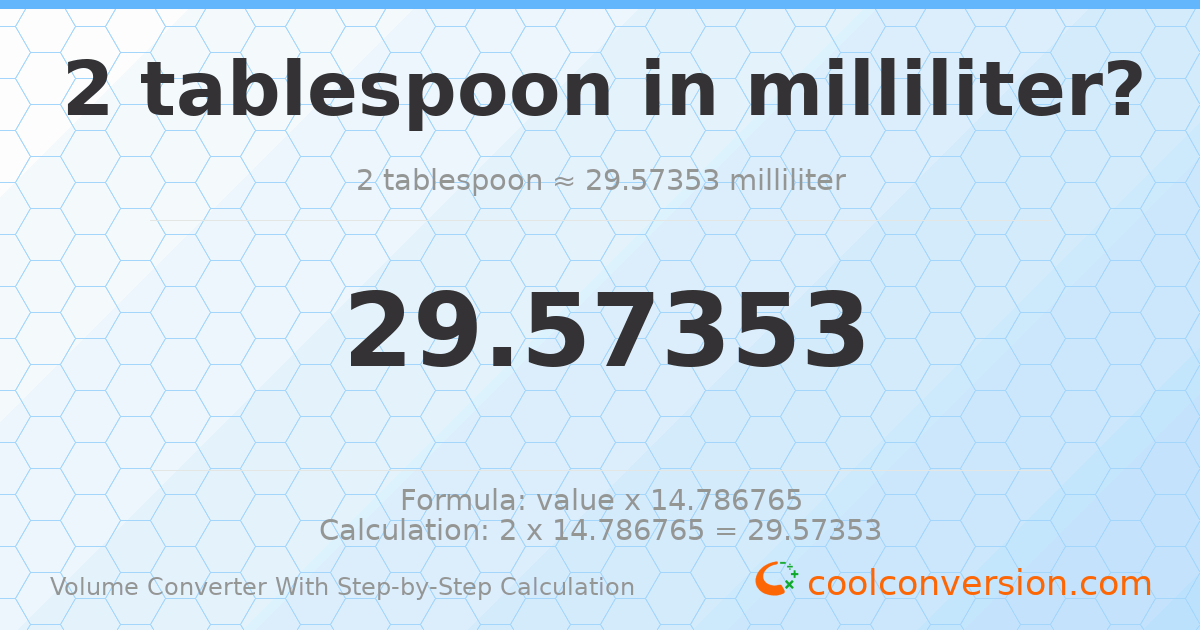
2 tbsp ≈ 29.574 mL
Calculation: mL = 2 tbsp × 14.7868 ≈ 29.574 mL
Tablespoon to Milliliter Converter
How much is 2 tbsp?
30 mL (1.0 fl oz) is about one US fluid ounce (29.6 mL), about two tablespoons.
What does 2 tbsp look like?

2 tbsp on the milliliter scale
2 tbsp = 29.57 mL
Did you know? One fluid ounce (US) is 30 mL.
1 US fl oz equals 29.57 mL. The Imperial (UK) fluid ounce is slightly smaller at 28.41 mL.
How to Convert Tablespoon to Milliliter
1 Tablespoon = 14.7868 milliliters
Milliliter = Tablespoon × 14.7868
Example: 2 tbsp × 14.7868 = 29.574 mL
Reverse Conversion
To convert milliliters back to Tablespoons:
- Remember, 1 milliliter equals 0.067628 Tablespoons.
- To convert 29.574 mL to tbsp, multiply
29.574 x 0.067628, resulting in2 tbsp.
Frequently Asked Questions
How much is 2 Tablespoons in milliliters?
2 Tablespoons equals 29.574 milliliters. This is calculated by multiplying 2 by the conversion factor 14.7868.
What does 2 Tablespoons look like in milliliters?
2 Tablespoons (29.574 milliliters) is a few tablespoons — typical for sauces or dressings.
How do you calculate 2 Tablespoons to milliliters?
Multiply 2 by the conversion factor 14.7868. The calculation is 2 × 14.7868 = 29.574 milliliters. This factor is defined by international measurement standards.
Share This Calculation
For general conversions between Tablespoons and milliliters, see the Tablespoons to milliliters converter.
Also convert Tablespoons to:

