
509 Weeks to Years
509 wk ≈ 9.755 yr
Calculation: yr = 509 wk × 0.019165 ≈ 9.755 yr
Week to Year (mean) Converter
How long is 509 wk?
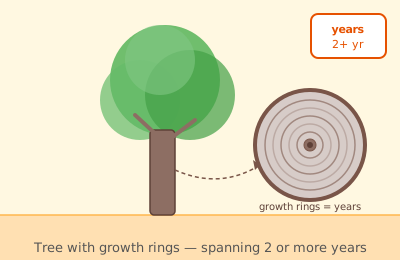
509 week (9.8 years) is comparable to the growth of a tree over multiple years.
What does 509 wk look like?
How to Convert Week to Year (mean)
1 week = 0.019165 year (mean)s
Year (mean) = Week × 0.019165
Example: 509 wk × 0.019165 = 9.755 yr
Reverse Conversion
To convert year (mean)s back to weeks:
- Remember, 1 year (mean) equals 52.1786 weeks.
- To convert 9.755 yr to wk, multiply
9.755 x 52.1786, resulting in509 wk.
509 wk is also equal to:
- 3.0784 × 10⁸ second
- 5130700 minute
- 85512 hour
- 3563 day
- 117.06 month (mean)
Frequently Asked Questions
How much is 509 weeks in year (mean)s?
509 weeks equals 9.755 year (mean)s. This is calculated by multiplying 509 by the conversion factor 0.019165.
What does 509 weeks look like in year (mean)s?
509 weeks (9.755 year (mean)s) is over a year — measured in months or years.
How do you calculate 509 weeks to year (mean)s?
Multiply 509 by the conversion factor 0.019165. The calculation is 509 × 0.019165 = 9.755 year (mean)s. This factor is defined by international measurement standards.
Share This Calculation
Nearby Conversions
For general conversions between weeks and year (mean)s, see the weeks to year (mean)s converter.
Also convert Weeks to:
Related Time Tools
- Hours to Decimal Converter — for payroll and timesheets
- Military Time Converter — 24-hour ↔ 12-hour clock
- Days From Today — date math from today
- Days Until — countdown to any holiday or date
- Time References — seconds, minutes, hours, weeks per day/year

